 WATER HEATERS
 Rinnai Water Heaters (Internal & External Installation)
 Caravan Water Heaters
 Commercial Continuous Flow Gas Water Heaters
 Domestic Tankless Multipoint Gas Water Heaters
 Gas Heaters Europe
 Calor Gas Heaters
 Gas Space Heaters
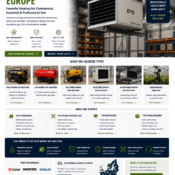 Warm Air Heaters Europe
 Gas Warm Air Heaters
 Electric Warm Air Heaters
 Boilers Europe
 ATAG Boilers Europe
 Combi Boilers Europe
 System Boilers Europe
 Hot Water Cylinders Europe
 Thermal Store Hot Water Cylinders
 Unvented Hot Water Cylinders
 Vented Hot Water Cylinders
 Commercial Hot Water Cylinders
 Air Conditioning & Air Purification
 Daikin Air Conditioning Europe
 Dehumidifiers Europe
 Humidifiers Europe
 Air purifiers Europe
 Shipping Containers Europe
 High Cube Containers
 Standard Containers (20ft, 40ft)
 Modified / Custom Containers
 Refrigerated Containers
 Storage Containers
 Renewable Energy Europe
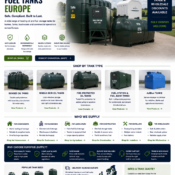 HOME HEATING OIL TANKS
 Bunded Oil Tanks
 AdBlue tanks Europe
 Fire-protected oil tanks Europe
 Fuel Bank Or Fuel Station Oil Tanks
 Single Skinned oil Tanks
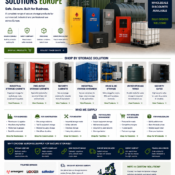 Secure Storage Europe
 Smokeless Coal Europe
 Firewood Europe
 Briquettes & Heat Logs
 WOOD PELLETS

Air Conditioning Buying Guide
Choosing the right air conditioning system can make a significant difference to indoor comfort, energy consumption and long-term operating costs. Whether you want to cool a bedroom, maintain comfortable temperatures in an apartment, improve conditions in an office or manage cooling across a commercial property, selecting the correct system is essential.
The European market offers several air conditioning options, including wall-mounted split systems, multi-split units, portable air conditioners, ducted systems, cassette units and larger commercial HVAC solutions. Each system has different installation requirements, cooling capacities and running costs.
This air conditioning buying guide explains how to compare AC systems, determine the appropriate cooling capacity, assess energy efficiency and choose equipment for your property. It is designed for homeowners, landlords, property developers, businesses, HVAC contractors and trade buyers across Europe.
At EuroFuelSupply, we help residential and commercial customers explore heating, cooling and energy products for their requirements. Whether you are planning a single-room installation or investigating equipment for a larger project, understanding the available options is the first step towards making an informed purchase. Air Conditioning Buying Guide.
1. What Type of Air Conditioning System Should You Buy?
The best air conditioning system depends on your property layout, number of rooms, installation budget, cooling requirements and local climate.
Before comparing brands or prices, identify the type of equipment that fits your needs.
Wall-mounted split air conditioning systems
A split air conditioner typically consists of an indoor unit and an outdoor unit connected by refrigerant pipework and electrical connections. Wall-mounted systems are widely used in homes, apartments, small offices and individual commercial rooms.
Advantages include:
- Efficient cooling when correctly sized and installed.
- Individual temperature control for the room served.
- Quiet operation from many modern indoor units.
- Heating capability on models designed as reversible heat pumps.
- A wide choice of capacities and features.
A split system is often a practical option when you need to cool one main room or a defined area.
Before purchasing, check whether your property permits an outdoor unit and whether the proposed installation meets building, noise and refrigerant requirements.
Multi-split air conditioning systems
A multi-split system connects several indoor units to one outdoor unit, subject to the manufacturer’s design and capacity limits.
This can be useful for homes, apartments and offices where several rooms need independent temperature control but there is limited space for multiple outdoor units.
However, the outdoor unit must have sufficient capacity for the connected indoor units and the expected simultaneous demand. Pipe-length limits, refrigerant-charge requirements and installation complexity should also be checked.
Best suited to: Properties requiring cooling in several rooms without installing a separate outdoor unit for every indoor unit.
Portable air conditioners
Portable air conditioners are generally self-contained units that extract heat from a room and discharge it outdoors through an exhaust hose.
They can offer flexibility for temporary cooling or properties where permanent installation is impractical. However, they often require a suitable window or wall opening, and their noise, energy consumption and cooling performance may be less favourable than those of a correctly installed split system.
Check the product’s stated cooling capacity, energy label, exhaust arrangement and suitability for the room.
Best suited to: Temporary cooling, rented accommodation where permanent equipment is not permitted, and specific situations where a fixed system is impractical.
Ducted air conditioning systems
Ducted systems distribute conditioned air through a network of ducts, with indoor equipment usually concealed in a ceiling void or dedicated plant area.
They can provide a discreet solution for larger homes, offices, retail premises and commercial buildings. However, ducted installation requires sufficient space, careful airflow design and professional commissioning.
The initial installation can be more complex than a standard wall-mounted split system.
Best suited to: New-build properties, major renovations and larger buildings where centralised air distribution is desirable.
Ceiling cassette air conditioning systems
Ceiling cassette units are commonly used in offices, shops, restaurants and other commercial spaces. The indoor unit is installed in or near a suspended ceiling and distributes air across the occupied area.
They can provide useful air distribution in open-plan environments, but their performance depends on ceiling height, room layout, obstacles and the selected capacity.
Best suited to: Commercial interiors with appropriate ceiling space and a requirement for relatively even air distribution.
Commercial HVAC and larger air conditioning systems
Larger commercial buildings may require more advanced systems, including variable refrigerant flow or volume systems, packaged equipment and other engineered HVAC configurations.
These systems can support multiple zones and complex operating schedules, but they require proper load calculations, system design and qualified installation.
For offices, hotels, retail buildings and larger property projects, the choice should be based on the entire building’s cooling and ventilation requirements rather than individual room size alone.
2. How Much Air Conditioning Capacity Do You Need? Air Conditioning Buying Guide
One of the most important steps when buying air conditioning is selecting the correct cooling capacity.
An undersized unit may struggle to maintain the desired temperature during hot weather. An oversized unit may cycle too frequently in certain operating conditions, potentially affecting comfort, humidity control and efficiency.
Cooling capacity is commonly expressed in kilowatts (kW) or British thermal units per hour (BTU/h).
Factors that affect cooling capacity: Air Conditioning Buying Guide
The appropriate capacity depends on several factors:
- Room floor area and ceiling height.
- Window size, orientation and solar exposure.
- Insulation quality and air leakage.
- Number of occupants.
- Lighting, computers, appliances and other heat-generating equipment.
- Local outdoor design temperatures and humidity.
- Air exchange and ventilation requirements.
- Whether the room is a bedroom, kitchen, office or commercial workspace.
A small, shaded bedroom may have very different cooling requirements from a sun-facing living room or an office full of computers.
Approximate room-size guide
The following table is a preliminary illustration only. It is not a substitute for a cooling-load calculation.
| Approximate floor area | Illustrative cooling capacity range |
|---|---|
| 10–15 m² | 1.5–2.0 kW |
| 15–25 m² | 2.0–2.5 kW |
| 25–35 m² | 2.5–3.5 kW |
| 35–50 m² | 3.5–5.0 kW |
| 50–70 m² | 5.0–7.0 kW |
These ranges can be inappropriate for rooms with high ceilings, extensive glazing, strong solar exposure, poor insulation or significant internal heat loads. A professional assessment is particularly important for commercial spaces and multi-room systems.
Should you choose a 9,000, 12,000 or 18,000 BTU air conditioner?
A 9,000 BTU/h unit provides approximately 2.64 kW of cooling capacity. A 12,000 BTU/h unit provides approximately 3.52 kW, while an 18,000 BTU/h unit provides approximately 5.28 kW.
These ratings help you compare equipment, but they do not determine the correct size by themselves. The cooling load of your actual room should guide the final selection.
For larger properties or business premises, ask an HVAC professional to calculate the required capacity for each zone and the overall system.
3. Energy Efficiency: How to Compare Air Conditioners
Energy efficiency can influence the cost of operating an air conditioner throughout its service life.
When comparing products, check the official product documentation and applicable energy label rather than relying on marketing terms alone.
SEER and seasonal cooling efficiency
SEER stands for Seasonal Energy Efficiency Ratio. It measures cooling efficiency over a defined seasonal test profile. Depending on the market and product documentation, you may also encounter SEER2 or other region-specific metrics.
Higher values generally indicate better seasonal cooling efficiency when products are evaluated using comparable test methods.
SCOP and heating efficiency
Some air conditioners are reversible heat pumps that provide both cooling and heating. For these models, SCOP—the Seasonal Coefficient of Performance—can help compare seasonal heating performance.
Check the relevant seasonal figures and climate conditions stated in the product documentation.
Energy labels in Europe
European energy labels can help consumers compare appliances using standardised information. The relevant label and product requirements depend on the type of equipment and applicable regulations.
For background on European product energy efficiency, consult the European Commission’s energy-efficient products information.
How to estimate electricity consumption
A simple estimate is:
Estimated electricity use = average electrical input × operating hours
For example, if an air conditioner draws an average of 0.8 kW of electricity while operating for five hours, its estimated consumption over that period is 4 kWh.
This is an illustration, not a prediction for a particular product. Actual consumption varies with outdoor temperatures, indoor settings, room heat gain, equipment modulation and operating conditions. A unit’s rated electrical input is not necessarily its continuous average input.
To estimate running costs, multiply the expected electricity consumption by your electricity tariff.
4. Air Conditioning for European Homes and Apartments
Residential buyers should choose equipment based on room use, property design, noise levels and installation constraints.
Air conditioning for bedrooms
For bedrooms, prioritise suitable cooling capacity, low indoor noise levels, accurate temperature control and convenient operating modes.
A correctly sized inverter split system may be suitable for many bedrooms. However, the best choice depends on the room’s cooling load and the installation options available.
Check the manufacturer’s sound-pressure ratings at different fan speeds rather than comparing a single headline noise figure.
Air conditioning for living rooms
Living rooms may need more cooling capacity because they often have larger windows, more occupants and greater exposure to sunlight.
Open-plan living and dining areas can be particularly challenging. Consider the room’s shape, ceiling height and the location of doors or adjoining spaces before choosing a unit.
Air conditioning for apartments
Apartment owners and tenants should check building rules before buying a fixed air conditioning system.
Restrictions may apply to outdoor units, building façades, drainage, noise and shared spaces. In some properties, a portable system may be the only practical option without permission for permanent installation.
Air conditioning for larger houses
A larger home may benefit from a multi-split or ducted system, depending on the layout and number of rooms.
Zoning can help occupants cool only the spaces in use, although the actual energy savings depend on the equipment, controls, building design and operating habits.
For new homes and major renovations, consider cooling alongside insulation, shading, ventilation and the property’s overall energy strategy.
5. Choosing Air Conditioning for Businesses
Commercial air conditioning requirements can differ significantly from residential applications, offices, shops, restaurants, hotels and warehouses have different occupancy patterns, equipment loads and ventilation needs.
Offices and workspaces
Offices may contain computers, lighting, meeting rooms and variable numbers of occupants. The design should consider equipment heat loads, occupancy schedules, zoning and fresh-air requirements.
An air conditioning system should not automatically be assumed to provide all the ventilation required for a workplace. Separate or integrated ventilation may be necessary to meet applicable building and indoor-air-quality requirements.
Shops and retail premises
Retail spaces may have frequent door openings, large display windows and changing customer numbers. The system needs to account for these conditions and maintain comfortable temperatures across the occupied area.
Hotels and hospitality properties
Hotels and hospitality businesses may require room-by-room temperature control, quiet operation and a plan for servicing equipment without unnecessary disruption.
Multi-zone or larger commercial systems may be appropriate, depending on the building design and operating requirements.
Restaurants and commercial kitchens
Restaurants often have high internal heat gains. Kitchens also require properly designed extraction and make-up air systems.
Air conditioning should be coordinated with ventilation and kitchen extraction rather than treated as a replacement for them.
Warehouses and industrial facilities
Large spaces can require specialist solutions because of high ceilings, heat-generating machinery, loading doors and uneven occupancy.
An experienced HVAC designer should assess whether conventional comfort cooling, evaporative cooling, ventilation or a combination of technologies is appropriate.
For larger projects, specify the operating conditions, building plans, equipment loads and required temperature ranges before requesting a quotation.
6. Air Conditioning With Heating: Should You Buy a Reversible System?
Many modern split and multi-split air conditioners use reversible heat pump technology, allowing them to cool in summer and provide heating in suitable conditions.
This can be useful for European households that need cooling during warmer periods and supplementary or primary heating during other parts of the year.
Before buying a reversible unit, check:
- Rated heating capacity at relevant outdoor temperatures.
- Seasonal heating efficiency.
- The manufacturer’s operating-temperature range.
- Defrost performance in cold weather.
- Indoor comfort and air distribution.
- Electrical requirements and installation specifications.
A reversible air conditioner is not necessarily a complete replacement for a home’s existing heating system. Its suitability depends on the building’s heat loss, room layout, local winter climate and the capacity of the selected equipment.
If you are comparing cooling and heating equipment for a property project, explore the EuroFuelSupply boiler category alongside suitable air conditioning products.
7. Understanding Air Conditioning Brands and Product Features
Brand reputation matters, but the best air conditioner is the model that meets your actual requirements and can be installed and maintained correctly.
When comparing equipment, evaluate the technical specification, energy performance, warranty terms, local service arrangements and compatibility with your property.
What should you look for?
Inverter technology: Many modern systems adjust compressor speed to match cooling demand. This can improve comfort and reduce cycling when compared with less flexible operating designs, although actual performance depends on the model and conditions.
Operating noise: Review the indoor and outdoor sound ratings, including low-fan settings and installation conditions.
Controls and connectivity: Remote controls, programmable schedules and smart-home features can improve convenience. Confirm which features are included rather than assuming they are standard.
Air filtration: Some models include filters designed to capture certain particles. Performance varies by filter type and maintenance. Standard air conditioning should not be assumed to replace adequate ventilation or a dedicated air-purification system.
Refrigerant: Check the refrigerant type, safety classification, service requirements and applicable European rules. Refrigerant regulations are evolving, so product suitability and future servicing should be confirmed before purchasing.
Warranty and service: Confirm warranty coverage, installation conditions, spare-parts access and whether local authorised servicing is available.
Is Daikin worth considering? Air Conditioning Buying Guide
Daikin is a recognised manufacturer of residential and commercial air conditioning and heat pump equipment. Its product range includes different system types and capacities, but not every model is suitable for every European installation.
When considering Daikin equipment, check the exact model, intended market, refrigerant, electrical specification, energy performance, warranty conditions and availability of local technical support.
You can begin by exploring the EuroFuelSupply air conditioning category and enquiring about the equipment suitable for your application.
8. Installation Requirements and European Regulations
Air conditioning performance depends heavily on installation quality. Even a high-efficiency product may perform poorly if it is incorrectly sized, positioned or commissioned.
Indoor and outdoor unit positioning
The indoor unit should be positioned to distribute air effectively without creating uncomfortable direct airflow onto occupants. The outdoor unit needs suitable airflow, secure mounting, service access and appropriate separation from sensitive areas.
Noise, vibration, drainage and the appearance of the building should also be considered.
Electrical requirements
Check the voltage, frequency, circuit protection, isolation arrangements and electrical load specified by the manufacturer. Electrical work should be carried out by appropriately qualified personnel under applicable local rules.
Refrigerant handling
Many split systems contain fluorinated refrigerants or other regulated refrigerants. Installation, servicing, leak checks and refrigerant handling may be subject to specific training, certification and legal requirements.
Confirm that the installer is qualified for the equipment and refrigerant concerned and that the installation complies with current national and European rules.
Permissions and building restrictions
Depending on the property and country, permissions may be needed for external units, listed buildings, shared façades, noise limits or other planning considerations.
Check the requirements before purchasing equipment, particularly for apartments, rented properties and commercial premises.
9. Air Conditioning Maintenance and Running Costs
Regular maintenance helps keep an air conditioning system operating as intended and can reduce problems caused by restricted airflow or neglected components.
Basic maintenance tasks
Depending on the manufacturer’s instructions, maintenance may include:
- Cleaning or replacing user-serviceable filters.
- Keeping air inlets and outlets clear.
- Checking for unusual noise, vibration or drainage problems.
- Keeping the outdoor unit free from obstructions.
- Arranging professional inspections and servicing as required.
- Checking system performance if cooling becomes noticeably weaker.
Do not open sealed refrigerant circuits or attempt specialist electrical repairs yourself.
How much does air conditioning cost to run?
Running costs depend on the unit’s electricity consumption, operating hours, temperature settings, local electricity tariff and the amount of heat entering the room.
To manage consumption, select the correct capacity, use sensible temperature settings, close windows and doors when appropriate, reduce direct solar gain and maintain the equipment.
In commercial premises, scheduling and zoning may help align operation with occupancy.
10. How to Buy Air Conditioning From EuroFuelSupply
Once you understand your cooling requirements, the next step is to compare suitable products and confirm delivery and installation arrangements.
EuroFuelSupply serves residential buyers, businesses, contractors, property developers and trade customers seeking heating, cooling and energy products across supported European markets.
Before enquiring, prepare the following information:
- Delivery location: Country and city or postcode.
- Application: Home, apartment, office, shop, hotel or another property type.
- Room or building details: Approximate area, ceiling height and number of rooms.
- Required capacity: If known, provide the proposed kW or BTU/h rating.
- System type: Split, multi-split, ducted, cassette or commercial HVAC, if already specified.
- Quantity: Number of indoor and outdoor units or complete systems required.
- Additional requirements: Heating capability, controls, electrical specifications and project timeframe.
If you do not know the required capacity, ask an HVAC professional to perform a cooling-load calculation before committing to a model.
Visit the EuroFuelSupply air conditioning category to explore relevant products. For larger projects or repeat purchases, review our wholesale energy products across Europe.
For product availability, pricing and destination-specific delivery options, you can request a quotation or contact the team at sales@eurofuelsupply.com. WhatsApp enquiries are also welcome at +49 152 17842843.
Availability, pricing, shipping methods and delivery timeframes depend on the selected product, quantity and destination.
Frequently Asked Questions About Buying Air Conditioning: Air Conditioning Buying Guide
What type of air conditioner is best for a home?
A wall-mounted split system is often a practical choice for cooling an individual room. Multi-split and ducted systems may be more appropriate for several rooms or larger properties. The best option depends on the cooling load, building layout, budget and installation restrictions.
How do I choose the right air conditioner size?
Consider room area, ceiling height, insulation, windows, solar exposure, occupancy and internal heat sources. Use capacity tables only as an initial guide; a professional cooling-load calculation provides a more reliable basis for selecting equipment.
Is inverter air conditioning better?
Inverter systems can adjust compressor speed to match demand, helping maintain steadier temperatures and potentially reducing energy consumption. Actual savings depend on the model, sizing, installation, climate and how the equipment is used.
Are split air conditioners suitable for European homes?
Yes, split systems are used in many European residential and commercial settings. Suitability depends on local climate, installation permissions, noise limits, electrical requirements and the equipment’s cooling and heating capabilities.
Can air conditioning also heat a room?
Many reversible air conditioners use heat pump technology and can provide heating as well as cooling. Check the product’s heating capacity, seasonal efficiency and operating-temperature range to establish whether it suits your climate.
What is the difference between split and multi-split air conditioning?
A typical split system serves one indoor unit from one outdoor unit. A multi-split system connects several indoor units to a compatible outdoor unit. Multi-split configurations require careful capacity planning and must follow the manufacturer’s connection limits.
How much electricity does an air conditioner use?
Consumption varies with rated input, compressor operation, room heat gain, outdoor temperature and operating hours. Check the product’s technical data and energy label, then estimate consumption using realistic operating conditions and your electricity tariff.
Do I need professional installation?
Fixed split and multi-split systems generally require professional installation. Electrical work, refrigerant handling and commissioning may be subject to legal qualification requirements. Follow the manufacturer’s instructions and applicable national rules.
Can EuroFuelSupply supply air conditioning products to European customers?
You can enquire about available air conditioning products and delivery to supported European destinations. Product availability, shipping costs and delivery times vary. Include your location, required system type and quantity when requesting a quotation.
Choose the Right Air Conditioning System for Your Property: Air Conditioning Buying Guide
Buying air conditioning is an investment in comfort, and the right system should match your property rather than simply offer the lowest purchase price.
Compare system types, cooling capacity, seasonal efficiency, noise, installation requirements and long-term operating costs before making your decision. For multi-room homes and commercial buildings, professional system design is particularly important.
EuroFuelSupply helps customers explore heating, cooling and energy products for residential, trade and commercial requirements across supported European markets.
Ready to explore your options? Visit the EuroFuelSupply air conditioning category, discover our wholesale energy products or request a quotation for your project.
EuroFuelSupply — Heating, Cooling and Energy Products for Homes and Businesses Across Europe.
Air Conditioning Buying Guide